
As artificial intelligence becomes increasingly embedded in digital services, ensuring that these systems are efficient and sustainable is becoming a key priority. A new research work titled “Promoting Sustainable Web Agents: Benchmarking and Estimating Energy Consumption through Empirical and Theoretical Analysis” addresses this challenge by studying the energy consumption of web-based AI agents and proposing methods to understand better and optimize their behavior.
Web agents, AI systems capable of autonomously interacting with websites, are being widely adopted for tasks such as navigation, automation, and information retrieval. While these systems offer significant benefits in terms of automation and scalability, their growing use also raises concerns about their computational cost and environmental impact.
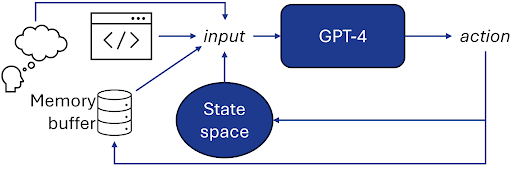
More details about the methodology and experimental evaluation can be found in the paper “Promoting Sustainable Web Agents: Benchmarking and Estimating Energy Consumption through Empirical and Theoretical Analysis” (arXiv:2511.04481).
Measuring the Energy Footprint of Web Agents
One of the main contributions of this research is a detailed analysis of how web agents consume energy during execution. The study combines empirical measurements with theoretical estimation models to provide a comprehensive view of the energy footprint associated with different types of tasks and interaction patterns.
By examining how agents operate in real scenarios, the research identifies key factors that influence energy consumption, including the complexity of the task, the number of interactions required, and the behavior of the underlying AI models. This approach allows for a more accurate understanding of where computational resources are being used and how they can be optimized.
Benchmarking for Sustainable AI Systems
The work also introduces a benchmarking methodology that enables the evaluation of web agents not only in terms of performance, but also in terms of efficiency. This represents an important shift, as traditional evaluation metrics often focus solely on accuracy or task completion, without considering the associated resource costs.
By incorporating energy consumption into the evaluation process, the proposed approach provides a more holistic view of system performance. This allows developers to make more informed decisions when designing and deploying AI agents, balancing effectiveness with sustainability.
Opportunities for Optimization
The findings show that energy consumption can vary significantly depending on how agents are designed and executed. Even when performing similar tasks, different configurations can lead to noticeable differences in resource usage.
This opens the door to optimization strategies aimed at reducing unnecessary computation. By improving how agents plan, interact, and process information, it is possible to achieve more efficient execution without compromising performance.
Alignment with SustainML
This research strongly aligns with the objectives of SustainML, which focuses on enabling more sustainable and resource-aware AI systems. By providing methods to measure and benchmark energy consumption, the work contributes to a broader effort to make AI systems more transparent, efficient, and environmentally responsible.
Understanding the energy impact of AI is a crucial step toward improving how these systems are developed and deployed. Initiatives like SustainML play a key role in supporting this transition by promoting tools and methodologies that prioritize efficiency alongside performance.
Looking Ahead
As AI systems continue to evolve and expand into web-based and autonomous applications, ensuring their sustainability will become increasingly important. Research efforts like this highlight the need to consider not only what AI systems can do, but also how efficiently they can do it.
By advancing the understanding of energy consumption in web agents, this work contributes to shaping a future where intelligent systems are not only powerful but also sustainable by design.








 This project has received funding from the European Union’s Horizon Europe research and innovation programme under grant agreement No 101070408.