

Artificial intelligence systems continue to evolve rapidly, but this progress is often accompanied by rising computational requirements and energy consumption. Training and deploying modern machine learning models can require substantial hardware resources, creating challenges related to scalability, operational cost, and environmental impact.
The research presented in this thesis investigates how AI systems can be designed to achieve strong performance while using computational resources more efficiently. Rather than relying exclusively on larger models or increased processing power, the work explores methods that optimize learning behavior, model representations, and system efficiency.
More details about the methodology, experimental evaluation, and research contributions can be found in the doctoral thesis “ Rethinking ML Model Selection Using Sustainable HCI” by Eya Ben Chaaben, published through HAL Open Science (tel-05443645).
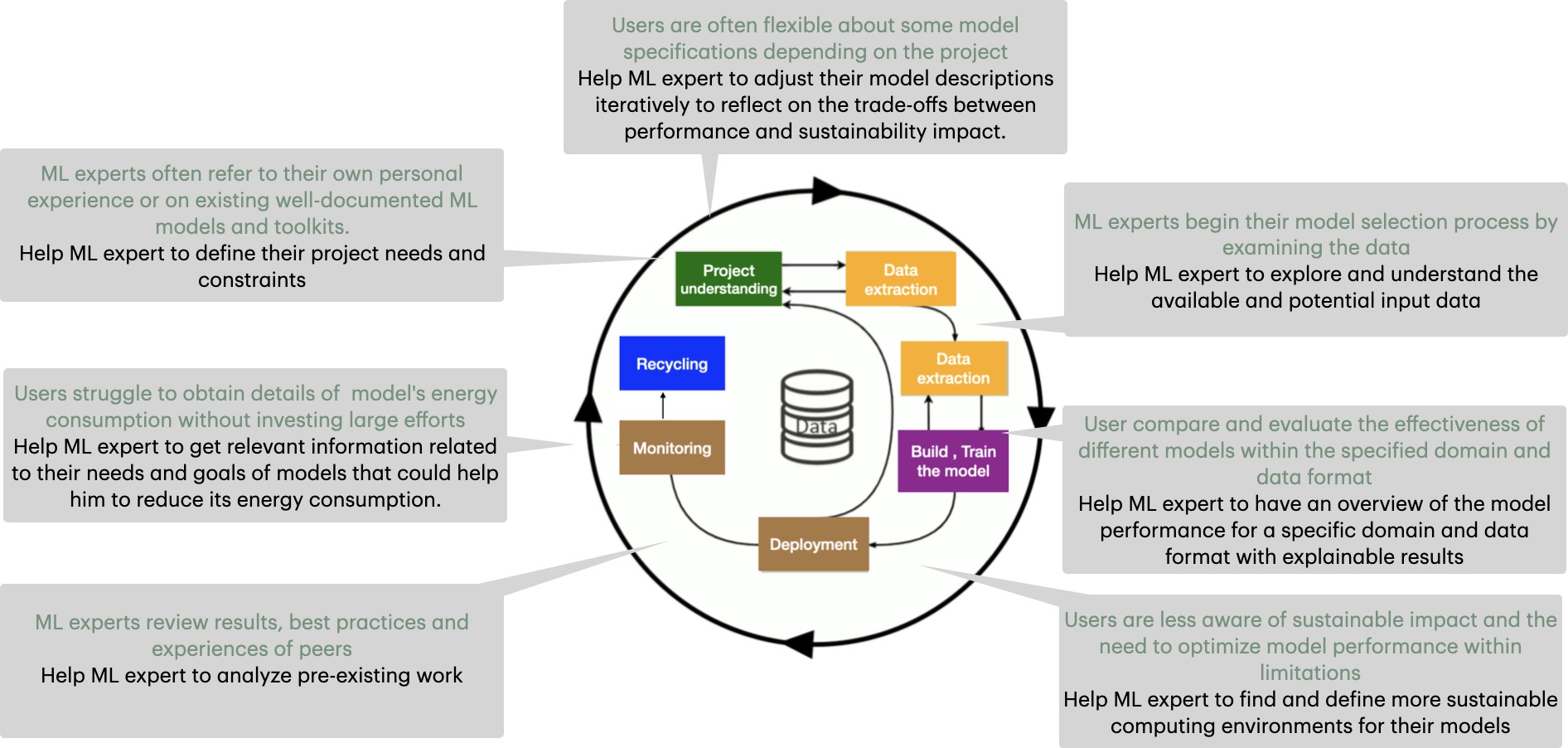
Improving Efficiency Without Sacrificing Performance
One of the central themes of the research is that efficiency and performance should not be treated as opposing objectives. The thesis explores strategies that allow machine learning systems to maintain competitive accuracy while reducing unnecessary computation and improving resource utilization.
The proposed approaches investigate how models can better organize and process information internally, enabling more efficient learning and inference pipelines. Experimental results across different scenarios demonstrate that carefully designed optimization strategies can improve both computational efficiency and model behavior.
Towards More Sustainable Machine Learning
The work also reflects a broader transition in artificial intelligence research toward sustainability-aware AI development. As machine learning systems become increasingly integrated into real-world applications, improving efficiency is becoming essential not only for reducing environmental impact, but also for enabling scalable and accessible AI solutions.
This perspective closely aligns with current initiatives in sustainable AI research, including SustainML, where improving resource efficiency and reducing computational cost are key objectives in the design of next-generation AI systems.
Efficiency Across the Entire AI Lifecycle
Beyond model training alone, the thesis highlights the importance of considering sustainability throughout the entire lifecycle of AI systems. Factors such as inference efficiency, deployment strategies, hardware utilization, and intelligent resource allocation all contribute to the overall environmental footprint of machine learning technologies.
By addressing these dimensions together, the research contributes to a more holistic understanding of sustainable AI development.
Looking Ahead
As AI systems continue to grow in complexity and adoption, research focused on computational efficiency and sustainability will become increasingly important. Works such as this thesis help demonstrate that future advances in artificial intelligence can be achieved not only through larger models, but also through smarter, more resource-aware design approaches that support long-term sustainability.








 This project has received funding from the European Union’s Horizon Europe research and innovation programme under grant agreement No 101070408.